Porcelain pavers have become an increasingly popular choice for a wide range of outdoor applications, including roof decks, plazas, patios, and pool surrounds. Their durability, low maintenance requirements, and consistent appearance make them an attractive alternative to traditional materials such as natural stone or concrete.
However, like any paving material, porcelain pavers come with both advantages and disadvantages. Understanding the pros and cons of porcelain pavers is essential when deciding whether they are the right choice for your project.
In this article, we take a closer look at the key benefits and limitations of porcelain pavers, along with how they perform in common outdoor applications.
Porcelain Pavers: Pros and Cons
| Property | Porcelain Pavers (Pros) | Considerations (Cons) |
| Durability | ✓ Resistant to wear, scratching, and impact under normal use | Impact from heavy objects can crack pavers |
| Water Absorption | ✓ Extremely low water absorption (<0.2%), resistant to moisture and freeze-thaw cycles | — |
| Maintenance | ✓ No sealing required; routine cleaning typically sufficient | — |
| Stain Resistance | ✓ Resistant to oil, stains, acids, and alkalis | — |
| Solar Reflectance | ✓ Options with high SRI values combat heat islands, can generate LEED credits | Darker porcelain pavers are attractive but will have lower SRI values |
| Heat Absorption | ✓ High SRI value porcelain pavers are cooler than many darker paving materials | Darker porcelain pavers will absorb more solar heat than lighter options |
| Cleaning | ✓ Most dirt and stains can be removed with water or a neutral detergent | More textured surfaces can retain dirt, and very stubborn stains may require targeted cleaning solutions |
| Slip Resistance | ✓ Textured surface options available for outdoor slip resistance | Performance varies depending on surface finish selected |
| Consistency | ✓ Manufactured to consistent size, thickness, and color tolerances | Less natural variation than natural stone |
| Appearance | ✓ Available in finishes that replicate stone, wood, or concrete | Limited number of unique prints (typically 6–12) may result in pattern repetition in larger installations |
| Weight | ✓ Lighter than most natural stone options, making them easier to handle during installation | — |
| Installation | ✓ Can be installed using traditional on-grade methods or pedestal systems for elevated decks | Pedestal system installations require more planning and installation expertise |
| Cost | ✓ Highly competitive upfront costs. Lower long-term maintenance costs over time | — |
| Structural Flexibility | ✓ High compressive strength when properly supported | Elevated pavers over 4” may require paver reinforcement measures |
Material Composition
Porcelain pavers are manufactured from a mixture of refined clays, sands, and other natural materials that are fired at extremely high temperatures. This process produces a dense, hard-wearing material with very low porosity.
Because porcelain pavers are produced in controlled factory conditions, they offer a high level of consistency in size, thickness, and performance. Many porcelain pavers are also digitally printed to replicate the appearance of natural stone, wood, or concrete, while maintaining uniformity across the installation.
Advantages of Porcelain Pavers
Durability and Strength
One of the most commonly asked questions is: are porcelain pavers durable?
The answer is yes. Porcelain pavers are highly resistant to wear, scratching, and impact, making them suitable for both residential and commercial applications.
Their dense structure allows them to withstand heavy foot traffic and, when properly specified, can also be used in areas such as roof decks and certain driveway applications. Unlike some natural materials, porcelain does not easily chip or crack under normal conditions.
Low Water Absorption
Porcelain pavers are virtually non-porous, meaning they absorb very little water. This makes them highly resistant to:
- staining
- mold and mildew
- freeze-thaw damage
This low absorption rate is one of the key reasons porcelain performs well in exposed environments, including rooftop installations and areas subject to changing weather conditions.
Low Maintenance and Cleaning
Another major advantage of porcelain pavers is their low maintenance requirements. Because the surface is dense and non-porous, dirt and debris remain on the surface rather than penetrating the material.
In most cases, routine cleaning with water and a mild detergent is sufficient to maintain their appearance. Unlike many natural stones, porcelain pavers typically do not require sealing.
Slip Resistance
Porcelain pavers designed for outdoor use are manufactured with textured surfaces to provide slip resistance. This makes them suitable for areas such as pool surrounds, walkways, and roof decks where safety is a concern.
Consistency in Appearance
Because porcelain pavers are manufactured, they offer a consistent appearance in terms of size, thickness, and color. While they can replicate the look of natural materials, they avoid the variation that can occur with quarried stone.
This consistency can be especially important for large commercial projects or elevated deck systems where uniformity is critical.
Disadvantages of Porcelain Pavers
Higher Initial Cost
One of the primary disadvantages of porcelain pavers is the higher upfront cost compared to some traditional paving materials. The manufacturing process, rich detail, and performance characteristics contribute to a higher price point.
However, when considering long-term maintenance and durability, the overall lifecycle cost may be more competitive.
Installation Requirements
Porcelain pavers often require more precise installation methods than some other materials. Depending on the application, this may include installation over pedestal systems, mortar-set systems, or other specialized assemblies.
Proper installation is critical to ensure performance, particularly in applications such as roof decks or areas subject to load-bearing requirements.
Limited Structural Flexibility
While porcelain pavers are strong, they are not flexible. This means that the substrate and support system must be properly designed and installed to prevent movement that could lead to cracking.
This is particularly important in elevated or rooftop applications where system design plays a key role.
Edge Chipping (Handling Consideration)
Although porcelain is highly durable once installed, care must be taken during handling and installation to avoid chipping at the edges.
Harder to Cut or Drill than Concrete
Due to the particularly hard and dense nature of porcelain as mentioned above, more specialized tools are required for cutting or drilling porcelain pavers. Diamond blades are essential for cutting and for most large projects, a wet saw is generally preferable. When drilling holes, it is essential to use drill bits specifically designed for hard and dense products like porcelain, and care also needs to be taken to avoid cracking the pavers if the correct technique is not followed while drilling.
Porcelain Pavers in Outdoor Applications
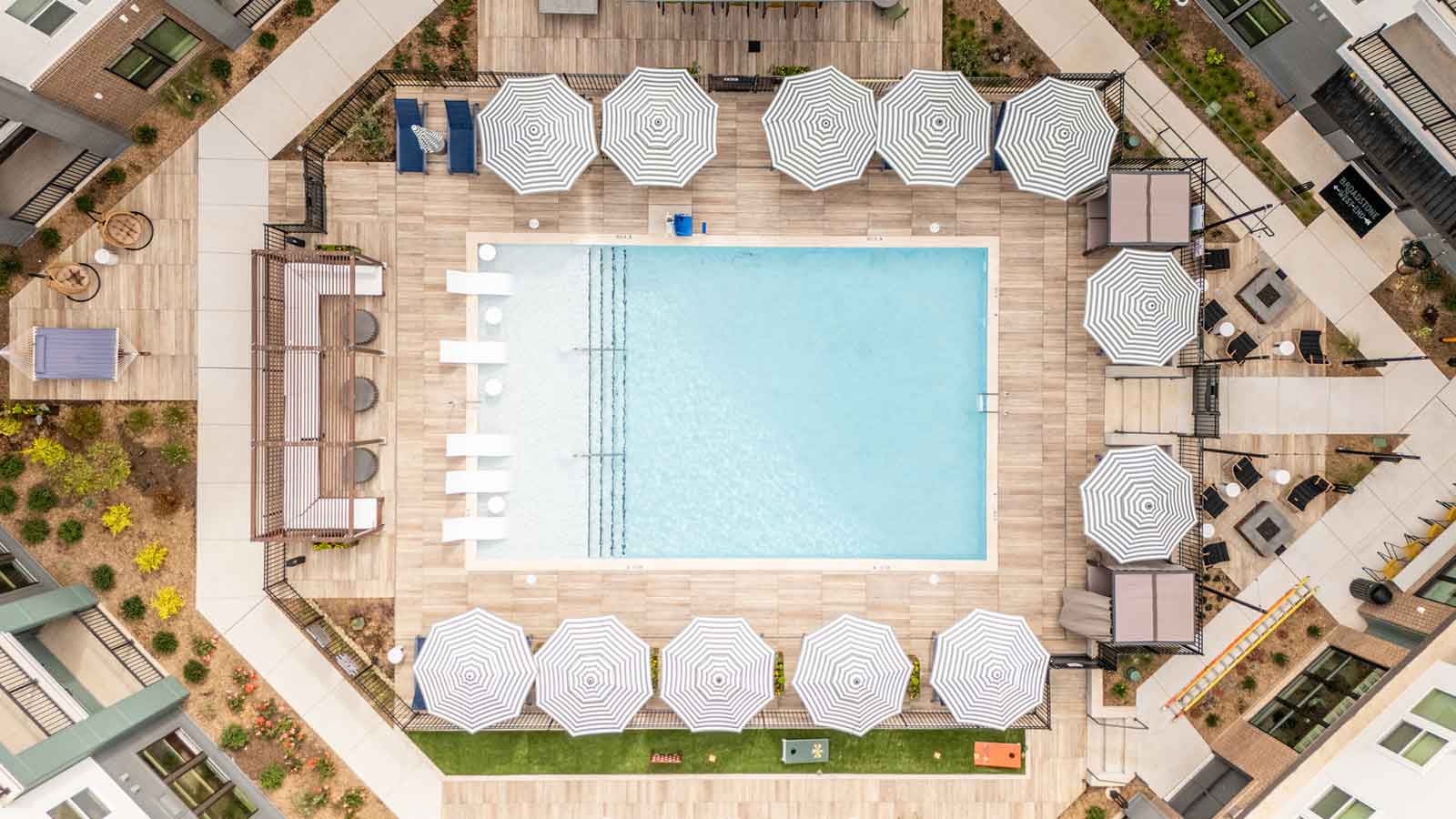
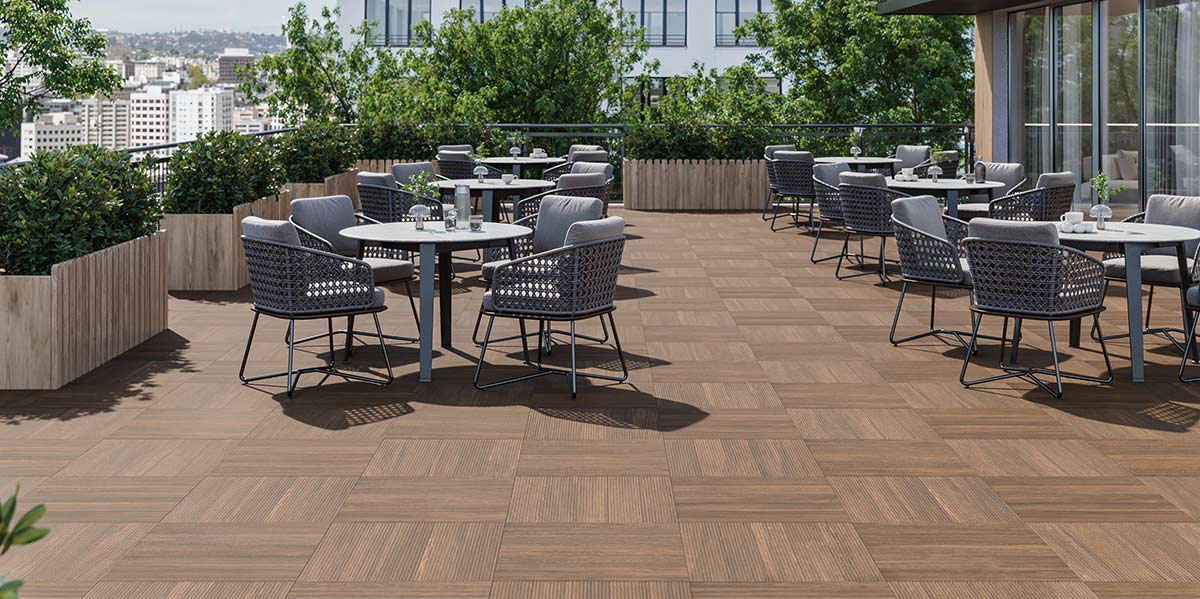
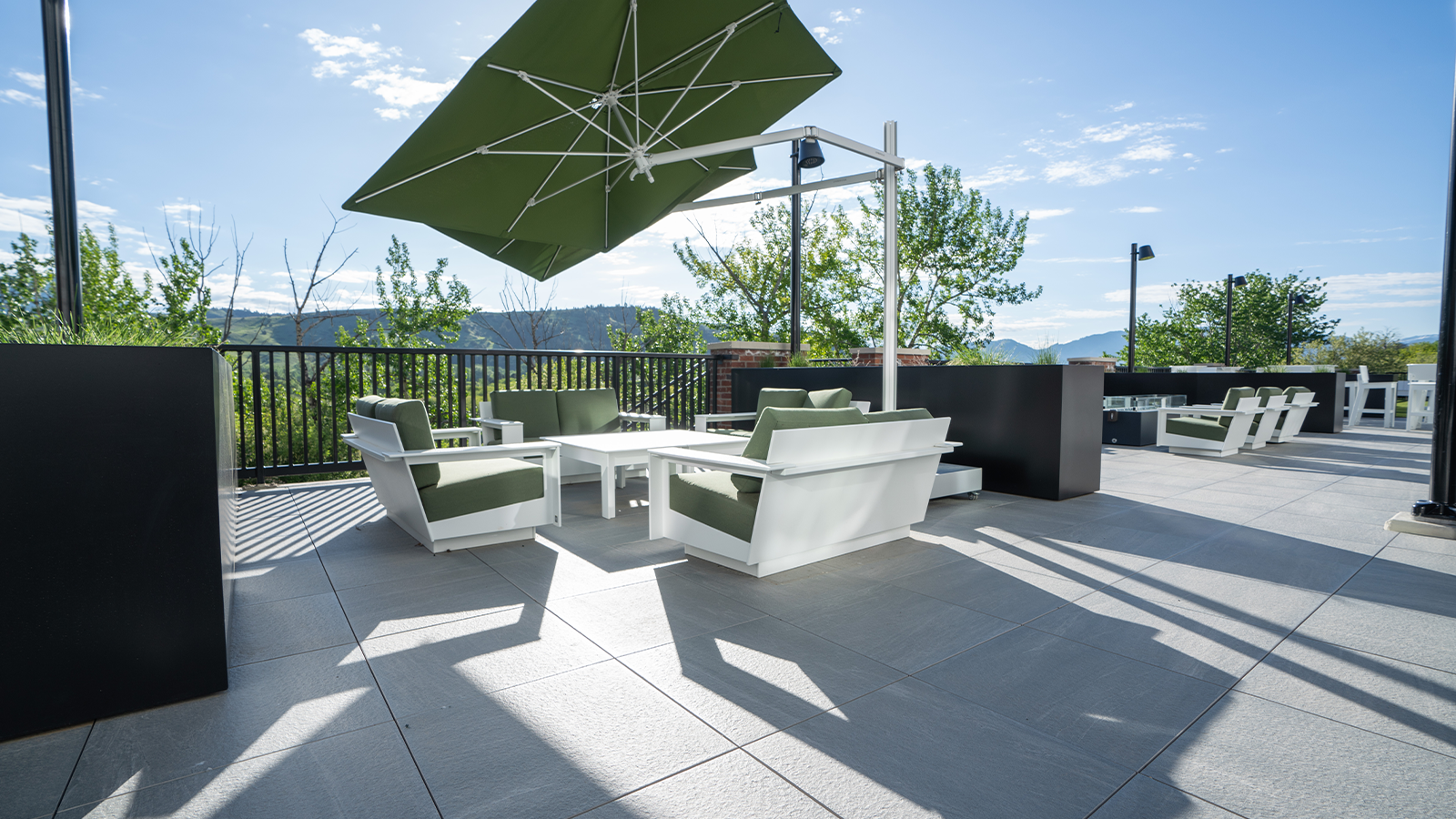
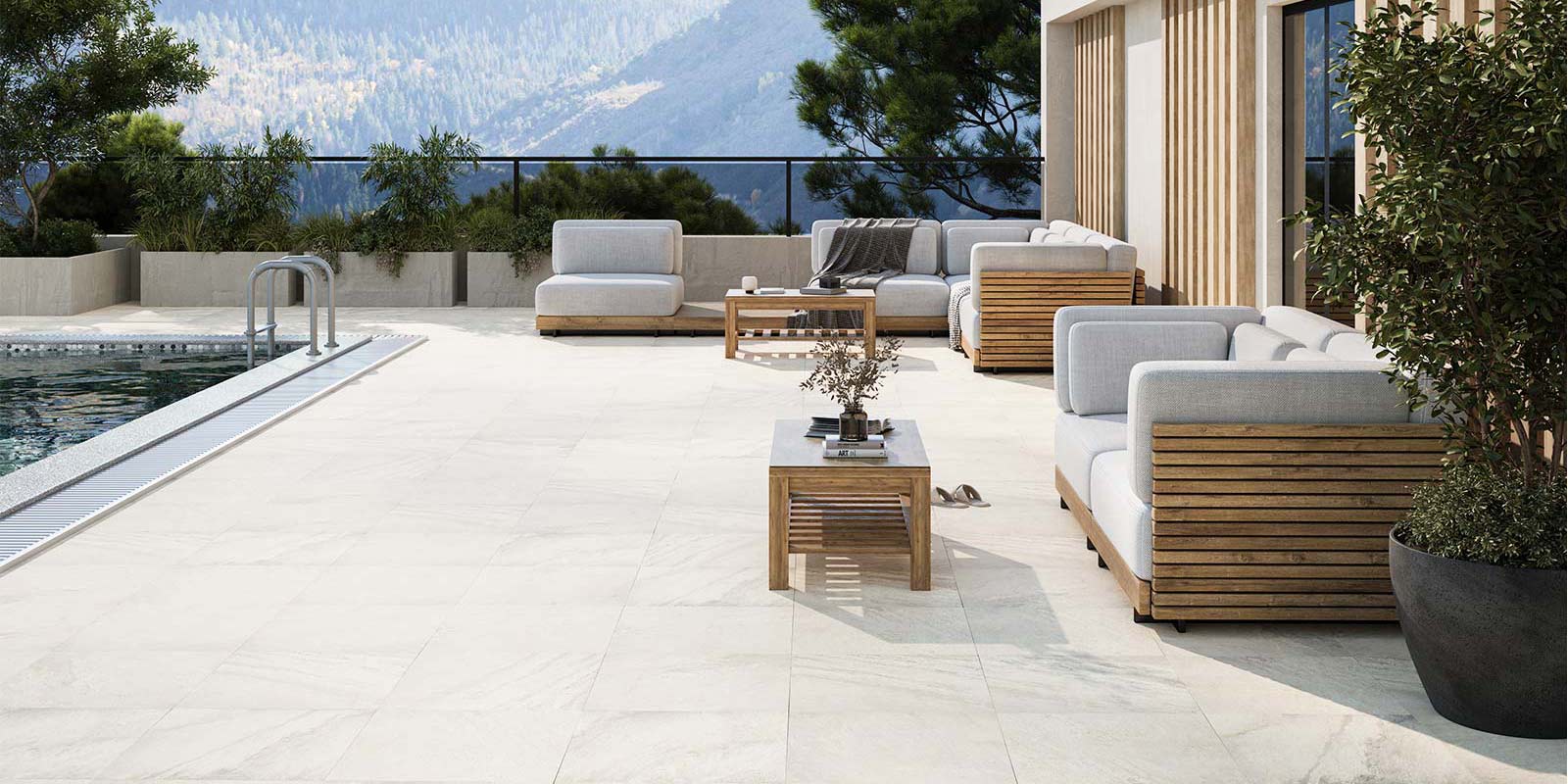
Porcelain pavers are used across a range of outdoor applications, including patios, pool decks, walkways, and roof decks. Their performance characteristics make them especially well-suited to environments where durability, low maintenance, and consistent appearance are important.
For patio applications, porcelain pavers offer a clean, modern aesthetic with minimal upkeep. For pool surrounds, their low water absorption and slip-resistant surfaces are key advantages.
In commercial and rooftop settings, porcelain pavers are often installed on pedestal systems, allowing for drainage, accessibility, and efficient installation over structural surfaces.
For more details on specific applications, see our related guides on patio pavers, roof deck systems, and porcelain vs. concrete comparisons.
Are Porcelain Pavers Worth It?
When evaluating whether porcelain pavers are worth it, it’s important to consider the specific requirements of your project.
Porcelain pavers are a strong choice when:
- long-term durability is a priority
- low maintenance is desired
- consistent appearance is important
- installation involves elevated or rooftop systems
However, they may not be the best fit for every project, particularly where budget constraints or simpler installation methods are the primary concern.
How Porcelain Pavers Compare to Other Materials
Compared to traditional materials such as concrete or natural stone, porcelain pavers offer advantages in terms of consistency, water resistance, and maintenance.
However, each material has its own strengths depending on the application. For a more detailed comparison, see our guides on:
- porcelain pavers vs. concrete
- porcelain vs. natural stone
Conclusion
Porcelain pavers offer a combination of durability, low maintenance, and design flexibility that makes them a strong option for many outdoor projects. While the initial cost and installation requirements may be higher than some alternatives, their long-term performance and consistency can make them a worthwhile investment.
By understanding the advantages and disadvantages of porcelain pavers, you can make a more informed decision about whether they are the right choice for your specific application.